Sunday, May 18, 2008

Briar Rose (post 7)


Chapters 27-29

Potocki is telling Becca and Magda about his experiences during the war and his experiences in a camp and his escape to the woods, and eventually finding his way home. However, he picks up some equiptment and rations and continues on where he is found by a group of people who keep him hostage.

There isn't anything said about Gemma yet, or how the two, Gemma and Josef, know one another. However, there are still four chapters left and hopefully we'll learn something about Gemma's past.

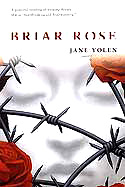
In response to the story of Briar Rose and the way it's being told through a Holocaust story it's very interesting. Hitler can be seen as Maleficent, the wicked hag who causes everyone in the kingdom to fall asleep. And, the thorns are mirrored by barbed wire and the SS and Gestapo. The camps are considered the palaces, however it is all less dreamy then the story of Sleeping Beauty. Hopefully, we'll find out who the prince is that awakens Gemma.

-Nicole

Briar Rose/Jane Eyre- A connection

Chapters 16-25 (continued)

Throughout these chapters a lot has been mentioned about the Holocaust because we are now getting stories from people who know what has happened in certain parts of Europe. Josef Potocki, for example, was in Chelmno where Gemma was. However, Potocki wasn't placed in the concentration camps because he was Jewish, but because he was gay. People who were considered as "the other" were put away to be killed. This included a huge amount of people from different backgrounds, races, and orientations. It brought to mind Bertha Mason in Bronte's Jane Eyre. She was locked in the closet because she was said to be mad, however what drove her husband Rochester to lock her up was her past and how different and foreign it was to him. And, look at that, how did Bertha die? She lit Thornfield on fire and jumped to her death from a balcony. The fire represents the rage Bertha and Jane felt throughout their doubling character life, however ties back to the Holocaust and how tons of people had died.

-Nicole

Briar Rose (post 6)


Chapters 16-25

Ok, so I've read a lot, nine chapters. I'll try to not summarize completely, however there are a few things that may need it just to catch us up in the book.

Becca has decided to go to Polan in search of Gemma's past. So far she has gone to Chelmno or Kulmhof. From what I am gathering it's a city or village that lives years behind the time period of the book. The people in this community still use horse and carriage and speak only Polish while in other parts of Poland people speak a little of English.
Becca and Magda, her translator, are not welcomed in the community by the habitants, however come across a priest that is willing to talk to them. He mentions a friend that lives in the city that their hotel is in. His name is Josef Potocki, and is willing to tell his story. He meets with the two girls later that night in the hotel and recognizes the picture of Gemma. He asks the girls to his house for lunch the next day.

So far there has been some quotes which are worth looking at with special care:

"'In Chelmno...all the roots there were severed.'" (107)
Throughout the novel trees have been often mentioned. However, roots here are used to show what could have been family ties or heritages. People were ashamed of what had happened at Chelmno and didn't want to be associated with it. Also, trees are often in the woods where Chelmno is located. It like Hansel and Gretel. The woods signified a new time period which involved a new kind of maturity. And like in Hansel and Gretel it is to survive.

"'It is a kind of cake, with wonderful spices. And baked in the shape of grand ladies and gentlemen. Maybe...even in the shape of a Ksiezniczka!'...'Gingerbread?', Becca suggested." (125)
Again, this brings up the idea of Hansel and Gretel. Which in the story of the two kids bread is symbolic for maturity and growing up. It's supposed to help them find their way home, but gets eaten by birds. Here, however, the gingerbread is in shapes of royalty and important figures almost as a clue to lead her to Gemma's past to her Ksiezniczka's past. And, by completing this journey I think that Becca will find a new kind of confidence in herself allowing her to grow as a person. The story is, in a way, a bildungstroman where Becca will come to a self realization. There are often doubling characters in fairy tales, however it's usually between the wicked stepmother and the witch. But here, Becca and Gemma seem to be doubling characters, experiencing the same journey, trying to make sense of something unbelievable, and learning something about themselves along the way.

"'Once it was believed birch trees housed souls of the dead.'" (132)
Again, the mention of trees brings to mind the family and heritage idea. With the souls of people staying in birch trees their roots aren't able to spread with their story dying with them.

"'In the woods. We were partisans. It is a long story...'" (157)
Again, the idea of the woods, and the maturity that takes place while trying to survive. Also, since the woods are secluded away from others and society a person is able to learn who is really their for them. Like Hansel and Gretel are there for one another, Josef and Gemma were there to help one another survive.

"They were, of course, living in the belly of the wolf. They never thought they would be devoured."(165)
The phrase, "in the belly of the beast", means basically that a person is already in the situation and there isn't really a way of getting out easily. So, Gemma and Josef were already involved in the war and there was no way for them to get out of what was going around them. However, the choice of wolf in place of beast makes if magical and more fairy tale like. Little Red Riding Hood afterall was being chased by a wolf and the three little piggies were hiding from the big bad wolf. Therefore, the choice emphasizes the fairy tale, while adding a little more of a scare to the description.

-Nicole

Wednesday, April 30, 2008

Grimms Fairy Tale Classics- Briar Rose. I used to watch these when I was little!


I noticed a few things like the 13th witch is green and bigger than the others which is a little stereotypical. It reminded me of The Wizard of Oz.
The prince wants, "to find the answer to this mystery" like Becca. But it is not a kiss that wakes Briar Rose, but the drawing of blood when he pricks his finger on a thorn. And, is Hitler the evil Maleficent that causes everyone to "sleep"? Or is it someone else...

Tuesday, April 29, 2008

Jane Eyre-Social Status

Jane's relationship with Rochester has been an interesting one from the beginning. There was, like in fairy tales, a sense of social barriers estricting them from having the relationship they wanted. However, in Jane Eyre the barriers they faced were much stronger than any I have seen in the fairy tales thus far.

The first encounter between Jane and Rochester took place during Jane's trip to town. Rochester who was on his horse has hurt his ankle and falls to Jane's level, who was walking in the same area as the dog. Even during their first encounter there was a social difference between the two. Rochester wouldn't allow Jane to help him because she is a governess and she is a woman, meaning that she is not his social equal. However, there is Blanche Ingram (equivalent to stepsisters in Cinderella), who pine for Rochester's attention and feel as though it is rightfully theirs do to their social status, however do not end up with him. Ingram constantly puts Jane down just as the stepsisters do to Cinderella out of jealousy and fear. However, like the evil stepmother (Mrs. Reed), Jane must overcome Ingram's attempts to discourage her and Rochester's relationship.

However, as the novel continues Rochester's affections grow towards Jane causing him to run to Jane when in need of help multiple times. For example, when Rochester is in need of assistance with Mason he runs to Jane instead of his social equal Colonel Bent. Showing that Rochester is ditching what is considered to be socially acceptable. He dumps the idea of being with Ingram, admitting to Jane it was to make her jealous, and pursues Jane. Jane accepts the engagement, however their wedding is broken off when she finds out who the woman in the attic really is. She leaves and spends time with her cousins where she learns she has inherited money, raising her social status. Rochester ends up blind and handicapped, however she goes back to him feeling as though they can finally be together with out her feeling inadequate. Jane must defeat the stepmother and sister characters, and gain something in order to be Rochester's social equal.

-Nicole

Monday, April 21, 2008

Jane Eyre (to be continued)

Ok, so Jane Eyre isn't your basic everyday fairy tale. It has twists and turns, however the novel does have some very fairy tale like ideas running through it.

Jane doesn't have a father or a mother throughout the story, however she has an aunt, Mrs. Reed, who treats her just as awful as any stepmother presented in a fairy tale, including the Grimm ones. Mrs. Reed enjoys locking Jane in the Red Room until she causes herself to become sick with uncontrollable emotions, and turning her back when her children, John, Eliza, and Georgiana, torture Jane mentally and physically. The evil aunt, like the stepmother, is an obstacle that Jane must overcome to become who she wants to be.

Jane has many "fairy godmothers" throughout the novel. There is always someone around to help her and make sure she is doing well. She travels place to place facing new hardships with new "cruel stepmothers" however there is always someone there she can turn to if in need.

Also, the other similar idea that runs throughout Jane Eyre and fairy tales is acceptance, and social status. Jane wants to be accepted by others and be on the same level, socially, as Mr. Rochester, her prince that she saves in the end. However, that is a blog for another day.

=]
Nicole

Sunday, March 30, 2008

TPCASTT Gretel


Gretel
Andrea Hollander Budy

A woman is born to this: sift, measure, mix, roll thin.
She learns the dough until it folds into her skin and there is
no difference. Much later she tries to lose it. Makes bets
with herself and wins enough to keep trying. One day she begins
that long walk in unfamiliar woods. She means to lose everything
she is. She empties her dark pockets, dropping enough crumbs
to feed all the men who have ever touched her or wished.
When she reaches the clearing she is almost transparent—
so thin the old woman in the house seizes
only the brother. You know the rest: She won’t escape that oven. She’ll eat
the crumbs meant for him, remember something of his touch, reach
for the sifter and the cup.

T(itle)- Reminds me of the story of Hansel and Gretel. Maybe about the sister?
P(araphrase)-The paraphrase is pretty self explanatory. It is about a woman who has a weight problem and how she struggles throughout life an how she tries and tries to be thin until she becomes so skinny that she is almost transparent.
C(onnotations)- The cooking register is very prominent throughout the entire poem. Also, there is the fairy tale that can be seen through the poem.
A(ttitude)-I find the attitude to be very sincere. However, I find it to also be a little bitter, as in a way to stick it to society and their values.
S(hift)-There are only a few shifts. The beginning is talking about the cycle of women and their weight and then it goes into the fairy tale.
T(heme)- The poem talks about the stereotypical view of women nowadays. That women try to fit into society's opinions of a perfect body and will go to the extremes to look good to the point where they almost look "transparent".
T(itle)- Gretel is the allusion to the Hansel and Gretel fairy tale, however it has little to do with the poem besides the fact that it ties in with the whole idea of the witch fattening Hansel up in order to eat him.

Monday, March 24, 2008

Fat Is Not a Fairy Tale by Jane Yolen


So, Saanchi did this poem for poem of the day a while ago, and I really thought it had something that I could use for my project. Well here I go. Wish me luck!

Fat Is Not a Fairy Tale
Jane Yolen

I am thinking of a fairy tale,
Cinder Elephant,
Sleeping Tubby,
Snow Weight,
where the princess is not
anorexic, wasp-waisted,
flinging herself down the stairs.

I am thinking of a fairy tale,
Hansel and Great,
Repoundsel,
Bounty and the Beast,
where the beauty
has a pillowed breast,
and fingers plump as sausage.

I am thinking of a fairy tale
that is not yet written,
for a teller not yet born,
for a listener not yet conceived,
for a world not yet won,
where everything round is good:
the sun, wheels, cookies, and the princess.

So, I guess I’ll just TPCASTT the poem and then wrap it up in the end.

T(itle)- Well, from growing up on Disney movies and playing with Barbies I’ve learned that our society values the hour-glass figure, big breasts and some hips with a booty. So, this is most likely talking about how we, as a society, do not consider fat as something to desire and that a fat princess would never get her happy ending.

P(araphrase)- The paraphrase is pretty easy. That the speaker is waiting for someone to make the move and try something different and try to change our society’s values. That, it may not be excepted now, but perhaps in the future the Princess will be voluptuous, and round like cookies.

C(onnotations)- The play with the names of traditional princesses and fairy tales is important. It shows how easily there can be a transition with these characters. Also, it emphasizes the speaker’s point that it’s fine to be plump. Also, the references to food add to the idea of a chubbier princess, who is healthier than the unevenly proportioned Barbies, and Disney Princesses.

A(ttitude)- The attitude is very earnest, however at the same time somewhat sarcastic, poking fun at the tradition Princesses we have grew up on. Also, it’s a very hopeful attitude to the overall poem.

S(hift)- There is a single shift where the speaker stops talking about the fairy tales she wants to reality that there may not be room for those princesses now, but maybe later on.

T(heme)- That society’s values shouldn’t be so narrow minded. Everyone can have a happy ending. And, there is hope for the future.

T(itle)- The same as before, however focuses more on the present and less of the future that is presented in the last stanza of the poem.

Now...it shows that the Princess may hopefully become an actual idol for girls that do not make them feel insecure about who they are. That it is possible for a person to be who they are and be proud of it. Maybe in the future there will be a total transition from the anorexic thin princess that needs her Prince Charming to save her. Afterall, there has been some major development in the character of princesses.
-Nicole
=]

Monday, March 17, 2008

The Motifs in Fairy Tales

So, there have been some on going events in the fairy tales that I have noticed. And, they always have an impact on the tale and the end product.

-Cruel Stepmother
Most people see mothers as loving and caring, therefore they could neve treat their biological children terribly like the characters in the fairy tales experience. So, most of the tales that have an evil mother figure are indeed stepmothers. Also, there is a lack of a father figure present in the tales because then the stepmother wouldn't be incharge as much as she is.

-Fairy Godmothers or help via magical creature
Magical help is often used in the tales however it is hard to completely say why. Personally, I believe that it gives that idea of a greater something that helps lead people into certain directions like a higher being.

-Miserable life before marrying Prince Charming
Of course the morals of these tales are that good, hard-working people end up with a better life in the end. Therefore if the heroine didn't have to suffer something unfortunate why should she end up so happy in the end. For example take Cinderella's stepsisters, they are vain cruel creatures who treat Cinderella like flith, however because she puts up with it she ends up happy in the end while her sisters end up with no eyes and defected feet.

-Damsel in distress
Most old fashion tales depict the heroine is some sort of trouble who needs her prince charming to saver her. However, recently in movies like Enchanted, which is a combination of many fairy tales, the main character Giselle saves her prince charming and ends up happy. Showing that women are now being seen as a strong gender, more so than they have in the past.

There are many more, however these seem to be the most imperative which help to lead to the ending the heroine always finds.

Sunday, March 2, 2008

How to Define a Fairy Tale

I found this website which I thought was pretty interesting. It explains what must be present in a story for it to be considered to be a fairy tale: http://www.northern.edu/hastingw/ftdefine.htm

and this page which is on the same site http://www.northern.edu/hastingw/propp.htm which explains different senarios which can be present during a fairy tale.

Nicole

Monday, February 4, 2008

Briar Rose (post 5)


And, the last one for today...

Chapters
13-15

Becca had not learned anything from the museum and called the journey an, "anticlimax" (88). It wasn't until after she and Stan had returned home that they came across anything noteworthy. Stan and Becca were reviewing Gemma's documents over lunch one day when Stan had the idea of enlarging the last permanent address that Gemma had crossed out. They got a name, Kulmhof, but Becca couldn't find it in any atlas. It wasn't until Stan gave Becca the man they met in New York business card, Harvey Goldman. When Becca had questioned Goldman about the place he became very freaked out and answered that Kulmhof was, "in the darkest regions of hell", (96). He also tells her that Kulmhof wasn't even an concentration camp but an extermination camp and no woman ever made it out alive. So, Gemma was indeed in Europe during WW2. How did she ever escape the extermination camp? We'll just have to wait and see.

SOMETHING ELSE: I have noticed that this story is very different between Fairy Tales in general, and if Gemma was indeed Briar Rose, then where is the prince that awoke her? Who is Eve's (Becca's mom) father? Is he the man that saved Gemma? All, we know is that this is completely different from traditional Fairy Tale telling. Once again, the princess has made a life for herself in a completely forgein country with no family and no help. Who needs Prince Charming aferall?

Another thing I found interesting was in a flashback chapter (ch.15) where a little boy who is listening to Gemma tell the story asks her what the song means that is in the story. The song is polish and when Gemma translates for him we find out that it means, "I ran and ran for twenty miles until I came upon a house. Sir! Give me a piece of bread; Look at me: I'm pale and dead. I had already washed and said the blessing when in walked the kidnappers"(99). Now both Becca and the little boy are very confused becuase there are no kidnappers in the Briar Rose story, however Gemma doesn't go on to explain. This is where Gemma may be putting some of her own story into the Fairy Tale. That maybe she finally found refuge in some house, but was found anyway and maybe that was when she was taken to Kulmhof.

Also, I've come up with an idea of why Gemma would put her story into a Fairy Tale. Often times a person's experiences are to hard to just tell becuase it cause to much pain, however they still want their story to be heard. And, in order to do so they put it into something that is supposed to be happy and fun and still pass down their life journey to someone who they love.

Nicole

Briar Rose (post 4)


And, the second post of the day...

Chapters 10-12

In chapter ten Becca becomes aware that Gemma may have had another alias, Ksiezniczka. However, this piece of information doesn't help or lead her to anything. But, when she calls and finds out from a Polish friend that Ksiezniczka means princess, she becomes more convinced that Gemma indeed is Briar Rose.

Stan, her boss, again is there to urge her on in the search for Gemma's past. He comes over and helps and looks through the documents and pictures in hopes of finding something Becca has missed. However, they don't find anything new. Stan schedules a road trip to New York, where the refugee now museum is. They spend the night at his old college friend's house and meet some senior citizens who were around during the time of the refugee camp. However, Becca didn't learn much except that her grandmother was indeed at the refugee camp and one of the men Becca met that night knew her grandmother. But, he didn't know much becuase apparently Gemma wouldn't let anyone close to her.

Let's see what unfolds!
=]
Nicole

Briar Rose (post 3)


So, today I stayed home and read about nine chapters of my independent reading book. So, be prepared for three posts =P!

Chapters 7-9

Within these three chapters Becca learns only a little bit more of her grandmother's life. She is urged on by her boss Stan to continue the search when she becomes discouraged when there is little to no progress in her findings. However, at the end of chapter eight Becca gets a lead that intrigues her continue her search for her grandmother's past.

She finds an article that once belonged to her grandmother that she clipped out of the Palladium Times and calls to see if she could get a lead as to why her grandmother, a maybe war refugee, would clip out an article of an 1944 Palladium-Times paper. She calls and gets in touch with a reporter named Arnie who has just recently written about an old refugee camp that has been redone into a museum. Arnie informs her he'll send a bunch of articles that are written about the museum as well as old articles from years ago.

In chapter nine, a flash back to Becca's childhood, Gemma is telling the story of Briar Rose and exclaims, "a briary hedge began to grow, with thorns as sharp as barbs are." Becca and her two older sisters question Gemma about what barbed wires are, however she just becomes very upset and stops telling the story. However, as well rounded readers we know that barbed wire surrounded the concentration camps. And, it is hinted throughout the book thus far that Gemma may be a refugee from the ww2.

So, we still don't have any ideas about Gemma's past except that she may be a refugee from Nazi Germany.

-Nicole

Thursday, January 24, 2008

A song that I heard...

So, the other day I was going through Pandora.com, I don't know if any of you heard of it, but it's a pretty cool website. Try it out. Anyway, I came across this song, and realized that it has something to do with my project...kinda. So, I googled the lyrics and here is the link because they are really long.


The beginning of the song where she says that, "Cinderella's on her bedroom floor She's got a Crush on the guy at the liquor store Cause Mr. Charming don't come home anymore", reminded me of my post on enchanted and how Prince Charming isn't so charming anymore. Because In Enchanted Giselle falls for Robert instead of Edward (Prince Charming) which is like this. If Cinderella falls in love with the guy from the liquor store he may have some baggage with him, just like Robert had in Enchanted (his wife left him, and he's a single father struggling to have a relationship) which shows that society is trying to get away from the idea of perfection that Disney and other authors have given Prince Charming as a characteristic.

The middle of the song has a lot of fun references to other maidens in Fairy Tales like Snow White and Sleeping Beauty.

The ending is what I really found interesting. With in the last verse Bareillis repeats the chorus however adds a line in the middle, "You're so worried bout the maiden though you know She's only waiting spent the whole life being graded on the sanctity of patience and a dumb appreciation but the story needs some mending and a better happy ending...", which I find very interesting. It shows that women have the power to make decisions for themselves and they shouldn't wait around for their "Prince Charming". It's important to take charge, and that's the only way of having a happier ending.

Ok, so Sara Bareillis introduced us to princesses that are just like everyday girls (doing chores and falling for unworthy guys), and gives us an entirely different moral at the end of the song than what I have seen in my previous readings. However, I think it's safe to say that this is definitely one of the best morals I have ever run across when dealing with Fairy Tale-like characters. I think that she's trying to say that every girl is a princess and shouldn't wait around for Prince Charming and take control of their life.

So, yeah, it isn't an actual Fairy Tale, but you must admit it does kick some major butt!
-Nicole
=]


Wednesday, January 16, 2008

Briar Rose (post 2)


So, I've read a bit more and...

Chapters 4-6

Throughout chapter four I've learned a lot. Most of which doesn't have to do with the book or the fairy tale that the book is based off of, but of the Jewish culture. Gemma has now passed away and Becca and her family are holding a funeral service, and the customs that Yolen has worked into the story have really sparked my interest. I wasn't aware that when a funeral is being held Jewish people put drapes over there mirrors, and better yet I didn't know why. Also, I've learned that it is a great honor to shovel dirt into someones grave when they die. I found these websites: this and here which give an idea of Jewish funeral customs.

What I discovered about the story in these chapters is that Gemma, has many aliases and none of her family members know her actual name, not even her only daughter. She didn't have a husband only a single daughter who has had three daughters. Not allowing her to pass on her name, but only a fairy tale. It's like Sleeping Beauty where the curse is that Briar Rose cannot pass on her name.

The family finds a box that belonged to Gemma and in it are many random items varying from photos, to news paper clippings, to random documents none of which connect Gemma to the life she said she lived. For example, she told her family that she came to America in the beginning of the second world war, however a document of immigration dating 1944 which would mean she came to America in the middle of the war.

Maybe in Gemma's eyes she was indeed little Briar Rose, the girl who was awoken while everyone around her slept and never awoke...an endless sleep...maybe that's where she lost her parents and siblings? That's if she had any...

We'll see...
Nicole
=]

Monday, January 14, 2008

Briar Rose -A Thorny Situation

Ok, so I started Briar Rose by Jane Yolen and I have to say so far it's a little confusing. It's not the contents of the text...it's more so the way it is organized. The story goes back and forth between the past and present in order for the reader to get the whole story, but sometimes I can't tell when it's the past or the present and it's a little tricky.

Anyway...

Chapters 1-3

The first chapter begins with Gemma babysitting her three granddaughters Sylvia, Shana, and Becca. They ask for a story, a story they know by heart, known as Briar Rose. Yolen starts the book this way to let the reader know that the girls enjoyed the story at one time and were very close with their grandmother.

The second chapter starts what is the present with Gemma in a nursing home and the sisters (who have grown apart) going to visit her. Becca is the only one who has kept in touch with Gemma and visits her almost everyday while the other two have moved out of state and made lives for themselves. It's not really said if Gemma recognizes the girls, but she starts to tell them the story they loved when they were younger. However, as she starts the story Sylvia exclaims, "not that again" (11). Both Shana and Sylvia are very uncomfortable while with their grandmother and offend Becca many times while being there. They're sisters, however Shana and Sylvia resemble how stepsisters treat Cinderella, they are mean and ruthless. They also treat Gemma terribly as shown by Slyvia's response to Gemma's story and the fact that Gemma believes that she is Briar Rose. Both Slyvia and Shana think she is crazy and they also believe that Becca is nuts for believing Gemma's claims about being Briar Rose which also adds to their wickedness.

The third chapter is another flash black to their childhood and to Gemma telling Becca the story before bed. There isn't much to this chapter, however it does add to the closeness between Gemma and Becca which seems to be very important to the story line. Maybe Gemma is Becca's fairy godmother in deguise helping her to sirvive her life with two mean sisters.

Well, we'll find out.
Nicole

Sunday, December 30, 2007

Bound (post 5)


So, I've finally finished Bound! I'm so pumped and excited to move on to the next book which is Briar Rose. However, before I can start that one I need to make at least one more post on Bound.

Chapters 26-29

So, Xing Xing goes down to the cave festival at the park. Mainly she is there just for the experience. She isn't looking to find a husband like Wei Ping is. Night has fallen and the ci sharing is about to start when Wei Ping and Stepmother spot a beautiful Xing Xing in the crowd which startles Xing Xing making her run off back to the cave. In the process she loses one of her mothers golden shoes...OH NO! When Wei Ping and Stepmother get home they find Xing Xing in her tattered rags and don't even suspect that she left the cave. So, now the shoe is lost and it travels from man to man who bids the highest until the price of it is so high that only the prince can afford it. He travels from town to town looking for the girl the shoe fits and he arrives to the Wu household last and when the shoe fits neither Wei Ping or Stepmother the Prince is completely downhearted. But, then Xing Xing gets the chance to prove that she is the girl from the cave festival and she and the prince leave together to live happily ever after.


Ok, here comes the important interesting stuff...

Xing Xing's shoe is golden unlike other versions. The slipper or shoe that the character wears reflects society's view of that person or type of person. In both the Grimm and Disney versions the slipper is glass, however in this version the slipper is golden. Glass is fragile and reflects the wearer as that and dainty, however in Bound Xing Xing's slipper is golden which is very valuable and not just in beauty, in smarts too. The Cinderella's in the Grimm and Disney versions are beautiful, but they are never displayed as intelligent unlike Xing Xing who tells the Prince what she wants and doesn't want, "I don't want to be bought or sold" (183) and other things about her, "My feet are not bound...[and] I don't have a dowry" (184). By doing this Xing Xing makes sure that the Prince really wants her as a wife not because she is beautiful, but because he has an interest in her as a person, a virtue that the Grimm and Disney Cinderella's did not have.

Something else I found really important is that, "...neither Stepmother nor Wei Ping ever looked at her. Not really. A change of clothes, and they didn't even recognize her." ( 166) showing that neither of them really saw anything special in Xing Xing, they just always assumed that she would be there. They didn't really see how intelligent she was or even what she looked like physically. It's the same as the Cinderellas in the other two versions because they were also not recognized at the balls they attended.

Also, this version is a little less gruesome, but like in the Grimm version both Wei Ping and Stepmother's feet do not fit the shoe because one's toe is to big and the other's heel is to big. However, they don't cut them off in order to try and get the shoe on. They don't seem as desperate as the stepsisters in the Grimm version.

Napoli like the Grimm brothers are trying to present the idea that when someone works towards something they'll get it in the end. Xing Xing wanted to get away from her Stepmother and she finally did. And, that intelligence is far more important than beauty. However, she doesn't present it in the violent and gruesome way that the Grimm brothers do.
Nicole

Wednesday, December 26, 2007

Bound (post 4)


So, it was a Wednesday morning during winter vacation when Nicole decided that it was time to once and for all try and get this book over with. =)

Chapters 21-25

After Xing Xing comes home from writing her ci she, Wei Ping, and Stepmother are seated around the kang eating dinner. It's a soup that has many ingredients including millet, mallow, reeds, and bamboo, "and fish, of course" (135). The next day Xing Xing goes down to the fresh water stream and calls for the fish, however no matter how much she calls for the fish it doesn't come. The fish in the soup is Xing Xing's mother fish. The fact that Stepmother would kill the girl's only friend and then feed it to her emphasizes that she is evil and even though she is being nice to Xing Xing by giving her the dress and "[delivering] fish to most of the families on [their] side of the hill" (133) she is still the Stepmother and because of that she is always up to no good. She most likely gave Xing Xing the job of writing the family ci for the festival as a way to get her out of the house so she could capture the fish and the fish she delivered to all the neighbors was probably part of the huge magic carp.

Also, throughout these chapters Xing Xing's ears keep buzzing and ringing. It happens whenever something unfortunate or terrible take place. It seems as though it is her mother and father trying to guide her from the dead. Like it's their spirits trying to help her along with life.

At the end of chapter 24 Xing Xing goes into the storeroom to hide the magic carp's bones that she had found outside in the back, while in there she came across a loose stone in the floor and took it out. Inside of the floor was a letter along with pearls, shoes, and a dress. The letter was addressed to Xing Xing from her mother telling her, "Ornament yourself, if that makes sense. Sell these things, if that makes sense." (149) and so Xing Xing puts on these items and makes her way down to the festival. Wow, talk about Cinderella in the making. So let's rewind. Xing Xing was originally going into the storeroom to put the magic carp bones, so in a sense even after a second death Xing Xing's mother was leading her and helping her. The fish is like the bird that guides Cinderella to the ball. So, Xing Xing is on her way to her ball, let's see if she finds prince charming.

Nicole

Sunday, December 2, 2007

How about something...Enchanted?


So, today I went to see Enchanted and there was so much stuff going on in that film I could barely keep it straight. But, I'll try my best =)...


The movie was a combination of many fairy tales, both Disney and non-Disney. Parts of Cinderella, Snow White, and Sleeping Beauty all made an apperance in this tale about a princess-to-be that takes a nasty fall and ends up in New York City.


Giselle started out as the usual maiden in a fairy tale who wants to find her one true love, and does when Prince Edward hears her singing from her hollowed out tree. Giselle, in the beginning, is the typical damsel in distress however takes a turn and becomes the heroine and kills the evil stepmother that tries to kill her new true love Robert who takes her into his home when she pops up in NYC with no clue of what to do but wait for Prince Edward to come and save her. Giselle isn't the typical maiden one would expect, she's actually very smart and ends up with her true love, happily ever after.


Queen Narissa (similiar to narcissus-yeah she's vain too) is indeed a stepmother, however she is the stepmother to Prince Edward and the loss of her throne is her motive to murder Giselle. She does turn into the ugly old hag and poisions Giselle with an apple like in Snow White. However, she also turns into a dragon like Malificent in Sleeping Beauty. She's very manipulative and sneaky, and admits herself as being "vindictive and spiteful". She ends up being slain by Giselle who saves Robert.


Prince Edward is really the total and complete opposite of what a Prince is in the other fairy tales. Normally Princes are brave, strong, smart, and handsome. Unfortunately for Prine Edward, he only ended up with three of the four. He was very brave, strong, and handsome, but he lacked in the brain department. He was completely oblivious to what his stepmother was doing and couldn't take a hint from Pip, the helpful chipmunk sidekick. He too ends up happily ever after with Roberts ex-girlfriend Nancy.


So, after all of this what has been observed?
Well...Nowadays, the Princess isn't the one who needs to be saved, she's the one who is doing th saving. She has grown throughout the years and doesn't need a Prince, but wants true love. She has gotten brighter, I mean after a hundred or so years of being hunted down don't you think she would catch on to the same tricks?


That Prince isn't what he seems to be and isn't needed by the Princess anymore suggesting that the Princess is more independent. The fact that Giselle fell in love with a man and not with Prince Charming displays the idea that society is getting away from the idea of Prince Charming and that there is something special in everyone. Plus, Robert had everything Prince Edward had and more.


The Stepmother in fairy tales just keeps getting more and more evil. The fact that Queen Narissa wasn't Giselle's stepmother but wanted to kill her anyway becuase she didn't want to lose her throne shows that the stepmother has become more ruthless and evil. And, as she said it herself, "vindictive and spiteful". She should have just tried to murder Prince Edward instead of Giselle because then there would never be a chance of her losing her throne to Edward's bride.


And, the best part of this movie is that it contains the meaning of a bunch of fairy tales, such as destiny cannot be overcome and what needs to happen will like in Briar-Rose (Giselle ends up with Robert even though she thought and tried to fall in love with Edward), evil will suffer in the end just like in Snow White (Narsissa dies), and working towards something will give you results like in Cinderella (true love).


Nicole =]
Saturday, December 1, 2007

Bound (post 3)...A Cinderella In the Making!


Thank god, the story is finally starting to resemble that of Cinderella besides the fact that Xing Xing has a cruel stepmother and both of her biological parents are gone.


Chapters 17-20


Xing Xing has arrived home with the medicine for Wei Ping's feet. The house is a disaster with filth and old spoiling food all over the place. Wei Ping is still on the kang, where she was when Xing Xing left, with stepmother laying beside her. Stepmother took the medicine from Xing Xing and fiddled around with it, but couldn't get the knot loose and began to breakdown. Xing Xing took cleaned the house from ceiling to floor and then washed up Wei Ping and Stepmother then Xing Xing took care of Wei Ping's feet. After month of caring for Wei Ping's feet they began to heal and look relatively normal. Stepmother and Wei Ping are in amazing moods because the cave festival is shortly coming up and there is said to be an unwed prince who will be attending.

After taking care of Wei Ping and Stepmother Xing Xing goes down to the fresh water stream and swims with the fish. She and the fish "encircled around each other like white ribbons, making the water swirl behind them. They slid past each other, touching wholly, like mother and child" (117). The fish is indeed a symbol for Xing Xing's mother, like in the Grimm version where the bird is a symbol for Cinderella's mother. These animals are to serve the girls like a mother would during hard times. It is with the fish and bird that Xing Xing and Cinderella find comfort that they cannot find with their stepmothers or stepsisters, they make life more bearable to deal with.


Some unusual events takes place in the house after Xing Xing cares for Wei Ping's feet. They respect her a little more, and she is called "Sister" by Wei Ping's or Xing Xing by Stepmother (usually calls her Lazy One). However, in a way they do this to manipulate Xing Xing in order to get what they want out of her. Stepmother has had a barrow made in order to wheel Wei Ping down to the cave festival and decided that Xing Xing will be the one to carry it. In order for Xing Xing to not feel used they give her the dress that Wei Ping was going to wear for the festival and Stepmother makes another for Wei Ping. Then they ask Xing Xing to represent the family in the poetry session of the festival and to represent their family. Xing Xing is more then elated, but in some way it's really upsetting. They use her and give her all the things she has ever wanted out of personal gain...and I can bet that they end up treating her just as horribly as they use to after the festival is over.


It's quite evident that there are some similarities and differences between this and the Grimm version. There's a festival going on, like the ball, and the girls get to go, including Xing Xing without any question because she has to push Xing Xing there unlike Cinderella who had to sneak out to the ball. Xing Xing's dress is made by Stepmother!!?!? What is this? Is stepmother showing some kind of heart towards Xing Xing, I highly doubt it, but we'll see.
Nicole